

Boards re-think investor updates as market volatility increases
Published AFR Mar 1, 2026 1:32pm
Share price volatility is prompting companies to refine their investor communications and leading some to take a more cautious approach to earnings guidance, senior directors say.
Boards are trying to limit the excuses for investors to sell shares in their companies in a market that is increasingly peppered with algorithmic trading firms, hedge funds and index funds that track the performance of a specific market benchmark.
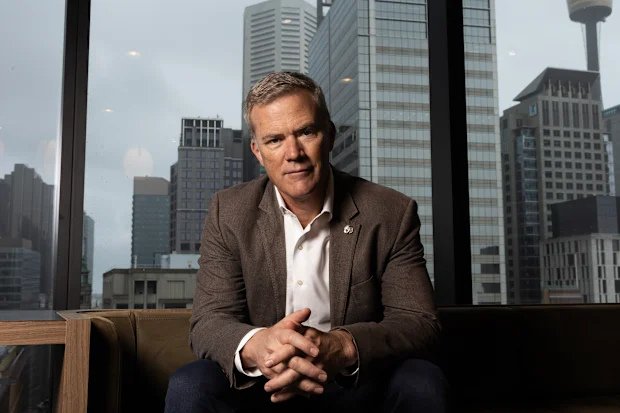
AFR: David Baxby will appear at the annual The Australian Financial Review Business Summit on Wednesday. Louise Kennerley
As a result, the proportion of investors who actively allocate capital based on a company’s underlying performance and allocate that capital over the medium or long term, has declined.
One way in which boards are trying to limit severe share price declines is to be cautious about any forecasts they provide.
In the recent reporting season, the shares of several companies were hit hard after only small misses to earnings forecasts. Shares of REA fell 8 per cent on the day the online property group said it had missed revenue and earnings estimates by 1 per cent.
Because the audience for earnings announcements is getting more and more narrow, you’ve got to ensure that the disclosures you’re providing are clearly accurate, but they’re also conservative to ensure that investors can form a properly informed view as to how they expect the company to trade in the future, but also to do that within the bounds of reasonableness,” said David Baxby, the lead independent director at listed family office Soul Patts.
In other cases, boards are re-thinking the way they frame market releases, given that trading algorithms scan documents for certain words, and its overall sentiment, and trigger buy and sell orders accordingly.
“The effect of algorithmic trading is that companies are re-thinking the wording and tone of releases because algorithms pick up the tone and make investment decisions. Often this is about form over substance,” David Gordon, chairman of health insurer NIB, said.
Baxby and Gordon were speaking ahead of The Australian Financial Review’s 11th annual Business Summit on Tuesday and Wednesday in Sydney.
Leading directors, including Marina Go, a director of toll road owner Transurban, supermarkets group Metcash and Southern Cross Media, said investors were increasingly demanding assurances from companies that they were keeping pace with technology changes and understood the potential impact of artificial intelligence on their business models.
“If you don’t talk about some of the innovations that investors are expecting, say about the evolution of your business model and AI, investors may well mark you down even if you put out a really good result,” Go said.
Gordon agreed.
“The pace of change, including the effects of disruption and the SaaS apocalypse, is so much faster that the market is looking to understand how companies are looking to manage change in terms of their business models,” he said.
“[There is pressure] to explain how a business is preparing to deal with the change. This is occurring at a time when technology changes are making it harder to formulate guidance generally, including financial guidance.”
Alison Watkins, the director of CSL, Wesfarmers and the Reserve Bank, said: “Management teams need to show they are open to embracing emerging technologies.”
But she said anyone who professed to be confident about the direction of technology was “defying credibility”.
Go and Baxby will appear on a directors panel at the summit on Wednesday with Alice Williams, a director of medical imaging company Pro Medicus, and Peeyush Gupta, chairman of Liberty and a director of Dexus, Magellan and Great Southern Bank.
The summit coincides with the rapid development and deployment of artificial intelligence is upending business models, rising inflation and stalling productivity.
View the article here.